Living Room Art Layouts
I asked Codex to help me arrange art in my living room. It produced measured layouts, revised schemes, and a Figma playground, but I still found the visual design poor. I’m keeping the attempts here as an AI fail: lots of output, weak visual judgment.
Narrative
Why I’m calling this an AI fail
I wanted help with the visual design of my living room. Codex produced plenty of material, but the design was still poor. I’m keeping this project as an example of how bad Codex can still be at visual-design requests, even when it can generate measured drawings, elaborate explanations, and editable files.
I wanted a playground
I supplied room measurements, sixteen artworks, and visual references. I wanted an editable playground where I could compare arrangements and keep moving things around. The request needed both visual judgment and a working file I could actually use. Accurate dimensions and editable layers were only part of that.
More output wasn’t better design
The conversation records three initial schemes, twelve measured wall studies, generated mockups, and two revised schemes after eleven editorial references. That is a lot of output. I’m preserving it to show the attempts, not because the number of artifacts or Codex’s descriptions of improved composition make the design good.
I had to point out the layout problem
At one point I said: “ok, everything is like on top of each other. the layout is not good.” Codex then reported reorganizing the Figma file into measured, reference, and photo pages. That was a response to my criticism. I’m not treating the reported cleanup as proof that the overall design succeeded.
What I’m keeping here
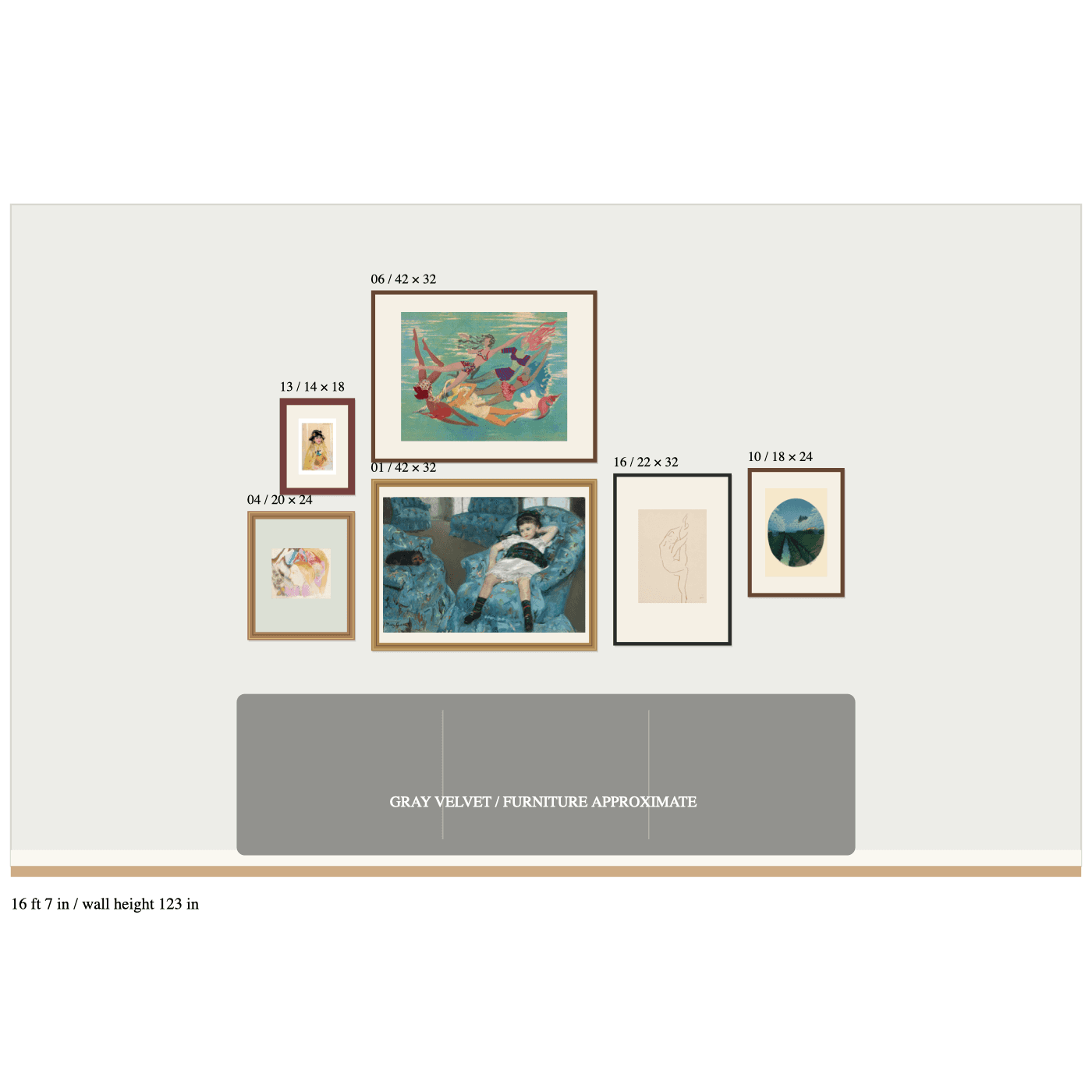
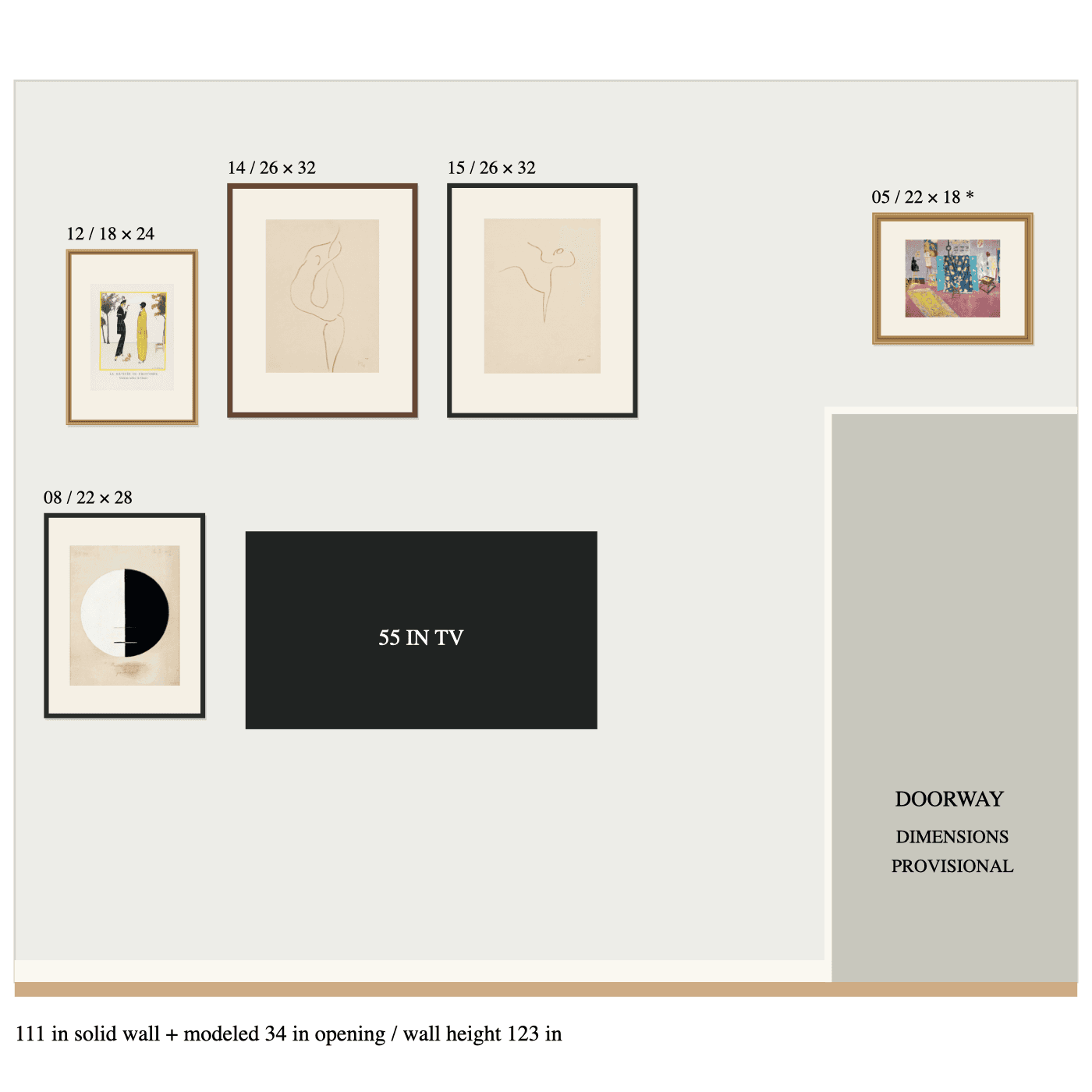
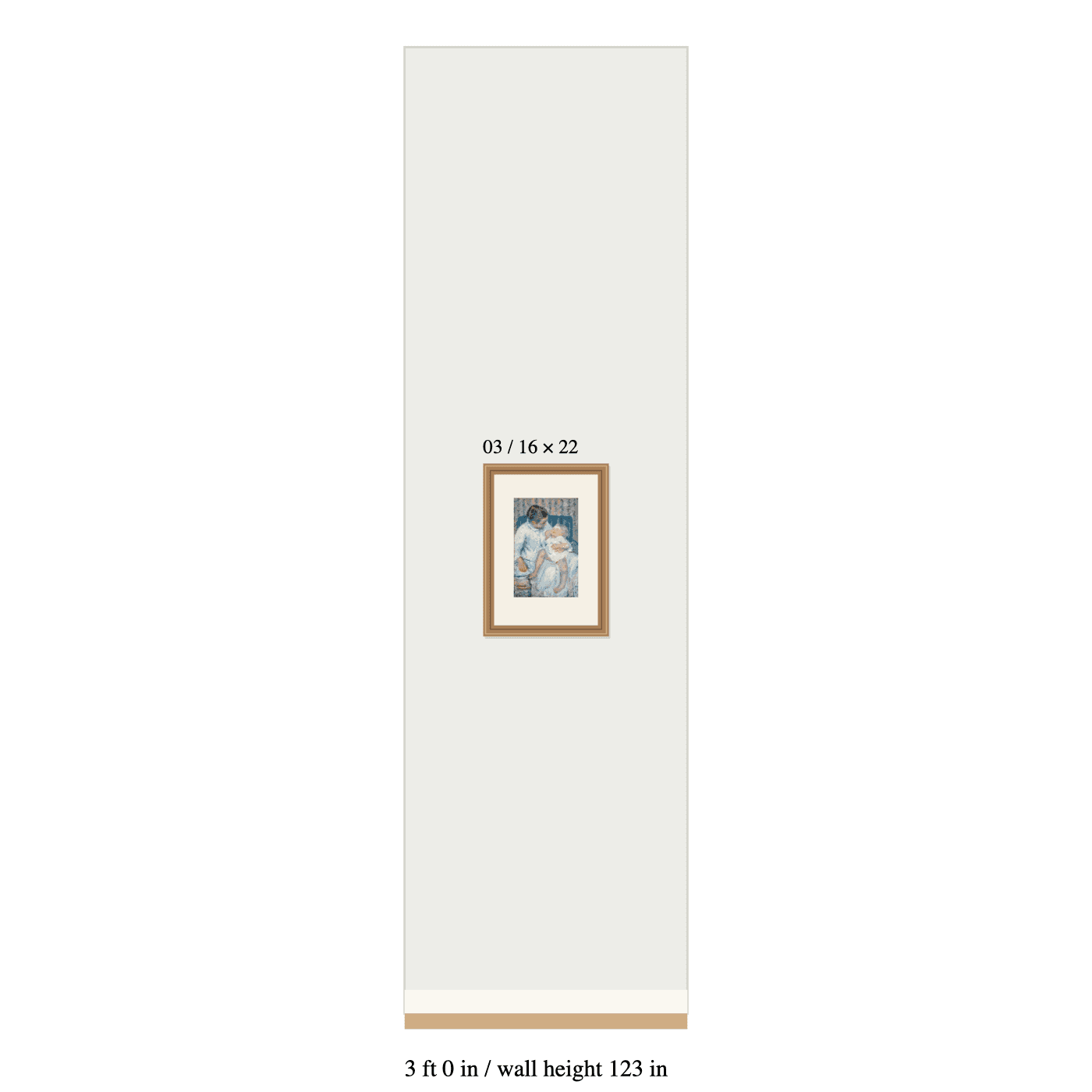
I’m sharing the measured elevations as evidence of the attempted layouts, not as recommendations or photographs of an installed room. They use one pixel per inch, with approximate furniture placeholders. I’m keeping the complete conversation archive and original room photographs private. This record does not establish a final accepted scheme, frame purchases, or installation, and it does not include a fresh check of the current Figma file.
System surfaces
Measured wall studies
Dimensional alternatives for the sofa wall, long wall, TV wall, and window return.
Interactive comparison and printable guide
Scheme comparisons, framing specifications, reference analysis, and visual mockups.
Editable Figma playground
Separate measured, reference, and photo pages with movable artwork and editable image, mat, and frame layers.
Implementation stack
Design artifacts
- • SVG measured elevations
- • JSON layout data
- • HTML comparison
- • PDF guides
- • CSV frame-and-mat schedule
Visual exploration
- • Figma
- • Codex
- • generated illustrative mockups
- • human visual review
Evidence
6 artifacts grouped by type so each kind of proof can be scanned on its own.
Data models
1 artifactPhysical placement model
Artwork identity, wall, horizontal position, height above floor, outer frame dimensions, frame face, and mat specification stay distinct so composition can change without losing scale.
6 entities
Workflows
1 artifactImages
4 artifacts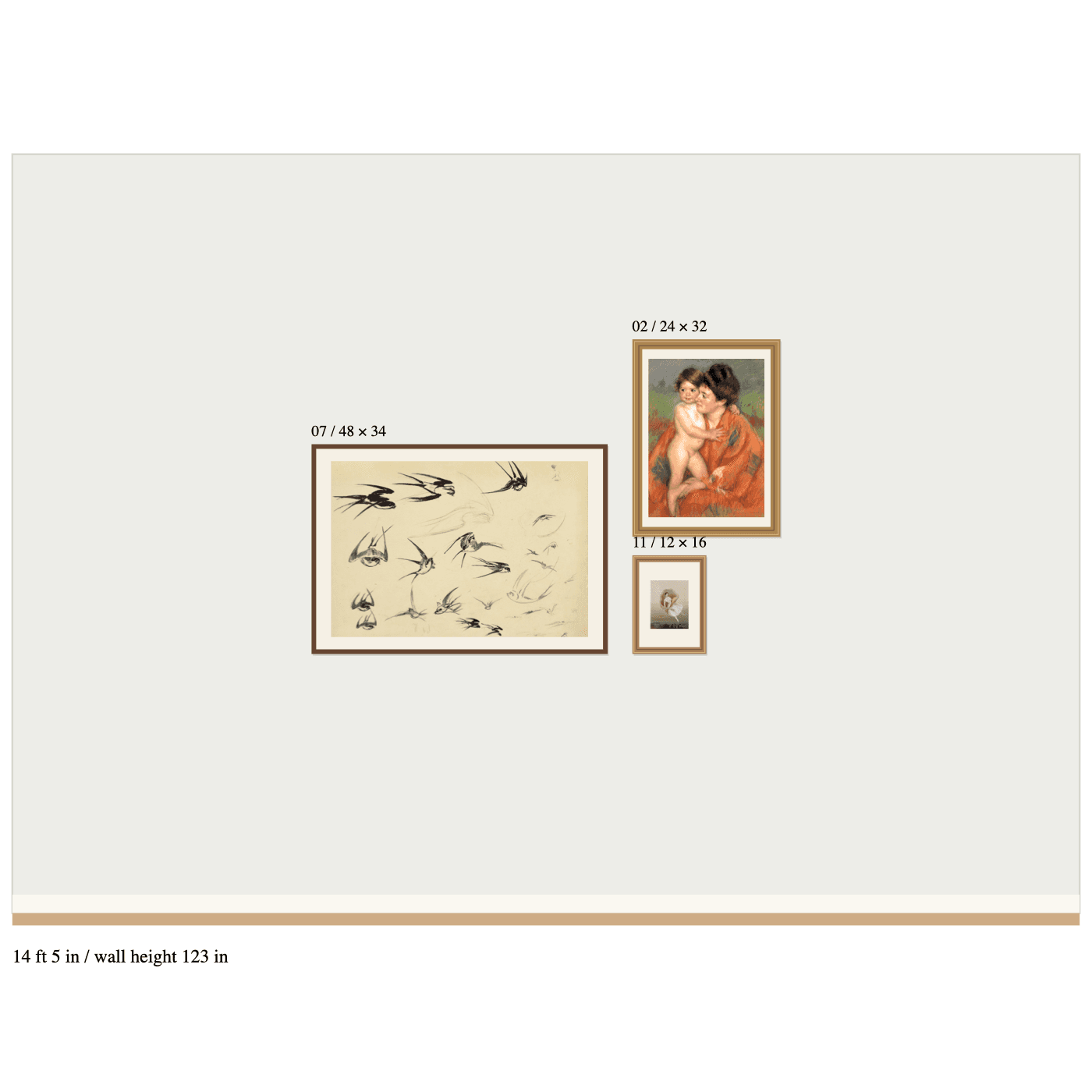
Key dates
Three initial schemes, two reference-led revisions, and a corrected three-page Figma playground are recorded in the source task.
I chose to keep these attempts as an example of Codex’s poor visual-design performance, under Personal and AI fail.